
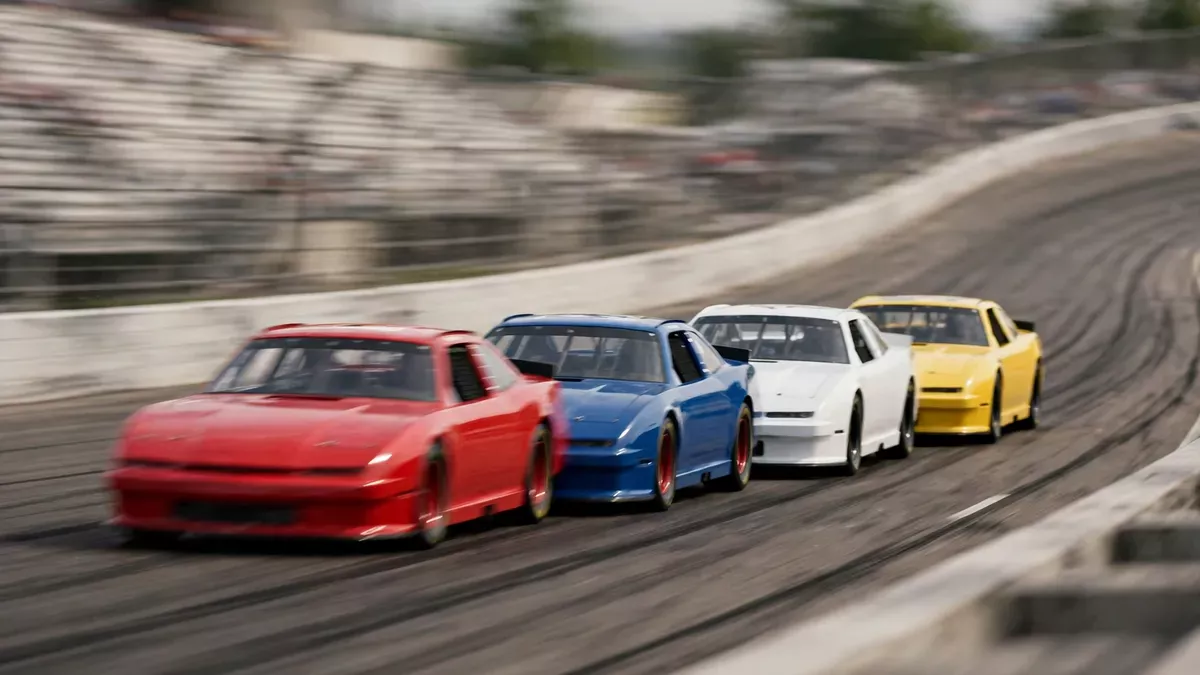
The NASCAR Cup Series is America’s premier stock car championship: 36 points-paying races from February to November, run on ovals, road courses and one street circuit, with 40 cars on the grid. Each race is split into stages that pay bonus points, and the season ends with a ten-race Chase — since 2026, a straight points contest among the top 16 drivers in the regular-season standings, with no eliminations and no winner-take-all finale. The driver with the most points after the final race at Homestead-Miami is the champion.
NASCAR is the most American of major motor sports: big V8-powered cars that look like the sedans in a showroom, racing inches apart at 200 mph on banked ovals, with pit stops, restarts and pack racing deciding as much as raw speed. This guide covers the cars, the tracks, the stages, the points and the championship — including the major format change that arrived for 2026, which rewrote the ending of the season.
Key Takeaways
- The Cup Series is NASCAR’s top tier, one of three national series, running 36 points-paying races a year from February to November.
- Races are split into stages (usually three; four at the Coca-Cola 600), with the top ten at the end of each of the first two stages earning bonus points from 10 down to 1.
- A race win is worth 55 points in the 2026 scoring (up from 40), second place 35, then 34, 33 and so on down the field. A driver who sweeps both stages and wins can score 75 points in one race.
- The season has two parts: a 26-race regular season, then a 10-race Chase for the top 16 drivers in the standings. The 2026 Chase has no eliminations — points are reseeded once, and the most points after the finale wins.
- The crown jewels are the Daytona 500 in February, the Coca-Cola 600 on Memorial Day weekend, the Southern 500 at Darlington and the Brickyard 400 at Indianapolis.
What NASCAR is
NASCAR — the National Association for Stock Car Auto Racing — was founded in 1948 by Bill France Sr., and its first Strictly Stock race ran on June 19, 1949, at Charlotte Speedway in North Carolina. The sport grew out of the American Southeast, and its heartland is still there: most teams are based around Charlotte, and the calendar is built around oval tracks that range from half-mile bullrings to the 2.5-mile Daytona International Speedway.
The 2026 season is the 78th season of NASCAR professional stock car racing and the 55th season of the modern-era Cup Series. The Cup Series sits at the top of three national series: below it are the O’Reilly Auto Parts Series and the Craftsman Truck Series, which run their own schedules and championships. Drivers generally climb the ladder from Trucks through the second tier to the Cup Series, and the Cup grid of 40 cars is the destination.
The cars: stock in name, race-bred underneath
A Cup car starts from a production-based body — Chevrolet, Ford and Toyota each field a model — but underneath it is a purpose-built race machine. The current car, the Next Gen, was introduced in 2022 and standardized far more of the car than ever before: a sequential gearbox, independent rear suspension, larger 18-inch wheels with a single lug nut, and a composite body that is cheaper to repair after a crash. The aim was to cut costs and close the gap between the richest teams and the smallest.
Power comes from a V8 engine producing around 670 horsepower at most tracks, reduced to about 510 at the superspeedways, where restrictor-style rules keep the pack together. Unlike Formula 1, where each team designs its own car, NASCAR teams all build to the same tightly controlled specification — which is why the racing is so close, and why the difference between winning and finishing 20th is often a pit stop, a restart or a drafting partner.
The tracks: four kinds of racing
The calendar mixes four kinds of circuit, and each one races differently:
- Short tracks (under a mile): Bristol, Martinsville, Richmond and Dover. Tight, rough, bumper-to-bumper racing where track position is everything and tempers are short.
- Intermediate ovals (1 to 2 miles): the backbone of the schedule — Charlotte, Las Vegas, Kansas, Texas, Michigan and others. Speeds are high and handling matters most.
- Superspeedways (2 miles and up): Daytona (2.5 miles) and Talladega (2.66 miles, the longest oval on the calendar). Cars run in huge drafting packs at nearly 200 mph, and a single mistake can collect a dozen cars.
- Road courses and a street circuit: Watkins Glen, Sonoma, Circuit of The Americas, and a street race in Chicago. Left and right turns, braking zones and gear changes — a completely different skill set, and the only tracks where the cars turn right.
A race, stage by stage
Since 2017, every points-paying Cup race has been split into stages. Most races have three stages; the Coca-Cola 600, the longest race on the calendar at 600 miles, has four. At the end of each of the first two stages, a caution flag flies, the field bunches up, and the top ten drivers at that moment earn stage points. Then the race resumes for the next stage, and the final stage runs to the checkered flag.
Stages changed the rhythm of a race. Before 2017, a driver with a dominant car could cruise through the middle of a long race and save everything for the end. Now there is something to race for every 60 or 80 laps: stage points, the caution that resets the field, and the pit strategy that surrounds the stage break — stop before the break and give up track position, or stay out, take the points and pit under the caution. The Daytona 500, for example, runs its stages at laps 65, 130 and 200, so the first two-thirds of the sport’s biggest race are already two contests before the final run to the flag.
Points: what a race is worth
The 2026 scoring raised the value of winning. A race win now pays 55 points, up from 40, while second place still pays 35, third 34, fourth 33, and so on down by one point per position. Stage points are unchanged: 10 for the stage winner, 9 for second, down to 1 for tenth, paid at the end of each of the first two stages.
| Finish | Race points (2026) | Stage finish | Stage points |
|---|---|---|---|
| 1st | 55 | 1st | 10 |
| 2nd | 35 | 2nd | 9 |
| 3rd | 34 | 3rd | 8 |
| 4th | 33 | 4th | 7 |
| 5th | 32 | 5th | 6 |
| 10th | 27 | 10th | 1 |
| 36th | 1 | — | — |
A driver who wins both stages and the race banks 75 points in one afternoon (55 + 10 + 10), against 60 under the old 40-point scale. The change matters because the gap between winning and finishing second is now 20 points instead of 5 — winning is worth much more than it used to be, which is the point: NASCAR wanted victories to carry real weight in a format that no longer hands out playoff spots for winning.
The season: 26 races, then a 10-race Chase
The 36-race season has two parts. The regular season runs 26 races, opening with the Daytona 500 on February 15 and ending at Daytona again in late August. Then the Chase begins at Darlington on Labor Day weekend and runs ten races to the finale at Homestead-Miami on November 8.
The Chase is the format NASCAR brought back for 2026, replacing the elimination playoffs used from 2014 through 2025. It works like this:
- Who qualifies: the top 16 drivers in the regular-season points standings. Winning a race no longer guarantees a spot — qualification is strictly by points.
- The reseed: points are reset once, after the regular-season finale, based on where each driver finished in the standings. The regular-season champion starts on 2,100 points, second place on 2,075, third on 2,065, and each seed below drops by five points, down to 2,000 for 16th.
- No eliminations: all 16 drivers stay championship-eligible through all ten Chase races. There are no rounds, no cutoffs and no resets along the way.
- The champion: whichever Chase driver has the most points after the finale at Homestead-Miami is the champion. The finale itself is now a rotating event rather than a fixed one — Homestead hosts it in 2026, taking over from Phoenix.
How we got here: two earlier formats
The 2026 Chase is a return, not an invention. The original Chase ran from 2004 to 2013: after 26 races, the top ten drivers (expanded to 12 from 2007) had their points reset and contested the final ten races, with the most points winning. It was replaced in 2014 by the elimination playoffs: 16 drivers, four rounds of three races, four drivers eliminated at each cutoff, and a winner-take-all Championship 4 finale at Phoenix, with race wins granting automatic entry and playoff points (five per win, one per stage win) banked and carried through the rounds.
The elimination format produced dramatic finales but also champions who had not been the best drivers across the season, and a single bad race could end a title campaign. After twelve seasons of that system, NASCAR announced on January 12, 2026 that it was returning to the Chase — a modified version of the original, with a larger field, a single reseed instead of a reset to level points, and a bigger reward for winning races. Playoff points, the currency of the old system, were abolished entirely.
The crown jewels
Four races sit above the rest. The Daytona 500 opens the season in February: 200 laps, 500 miles, the biggest prize in the sport and the one every driver wants on their record. The Coca-Cola 600 runs on Memorial Day weekend at Charlotte: 600 miles, four stages, the longest race on the calendar and a test of endurance as much as speed. The Southern 500 at Darlington, on Labor Day weekend, is the sport’s oldest superspeedway race, run on an egg-shaped oval that punishes the wall — the “Lady in Black.” And the Brickyard 400 at Indianapolis Motor Speedway takes stock cars to the most famous oval in American racing.
Two exhibition races sit outside the championship: the Clash, which opened 2026 at Bowman Gray Stadium, and the All-Star Race, which in 2026 ran at Dover. Neither pays points, but both pay prize money and pride — and both are useful introductions for a new fan, because the formats are short, simple and all-action.
What to watch for
If you are new to NASCAR, three things will tell you most of what is happening. First, track position: at short tracks and road courses, where passing is hard, the car in front is usually the car that stays in front, so pit strategy and restarts matter more than outright speed. Second, the draft: at Daytona and Talladega, cars run in packs and no one can pull away alone — watch for the outside line organizing a run, and for the “big one,” the multi-car crash that can collect half the field in a second. Third, the stages: a driver fighting for tenth at the end of Stage 2 is not fighting for pride, but for a point that could decide a championship in November.
NASCAR FAQ
How many races are in a NASCAR Cup Series season?
Thirty-six points-paying races, from the Daytona 500 in February to the finale at Homestead-Miami in November, plus two non-points exhibition races.
What is a stage in NASCAR?
A segment of a race. Most races are split into three stages, and the top ten drivers at the end of each of the first two stages earn bonus points, from 10 down to 1. The final stage ends with the race winner.
How does the 2026 Chase work?
The top 16 drivers in regular-season points advance to a ten-race Chase. Points are reseeded once (2,100 for the regular-season champion, down to 2,000 for 16th), there are no eliminations, and the driver with the most points after the finale is the champion.
What happened to the old playoff format?
It ran from 2014 through 2025: 16 drivers, elimination rounds, a Championship 4 and a winner-take-all finale at Phoenix. NASCAR replaced it for 2026 with the returning Chase format, and abolished playoff points.
Why is a race win worth 55 points now?
NASCAR raised the win from 40 points to 55 for 2026, when winning no longer guaranteed a Chase spot. The bigger gap over second place (20 points instead of 5) keeps victories valuable in a points-based championship.
How long is a NASCAR race?
Most Cup races run 400 to 500 miles and last three to four hours. The Coca-Cola 600, at 600 miles, is the longest; short-track races like Martinsville run about 263 miles but take a similar amount of time because the speeds are lower.
Related reading
More from our Motorsports hub (/motorsports/): what are stage points in NASCAR (/what-are-stage-points-in-nascar/), how NASCAR qualifying works (/how-nascar-qualifying-works/), how Formula 1 works (/how-formula-1-works/), and the scores (/motorsports/scores/), schedule (/motorsports/schedule/) and standings (/motorsports/standings/) pages that follow the season round by round.
Corrections: if you spot an error in this guide, tell us through our Corrections Policy (/corrections-policy/) page and we will check it against official sources.