
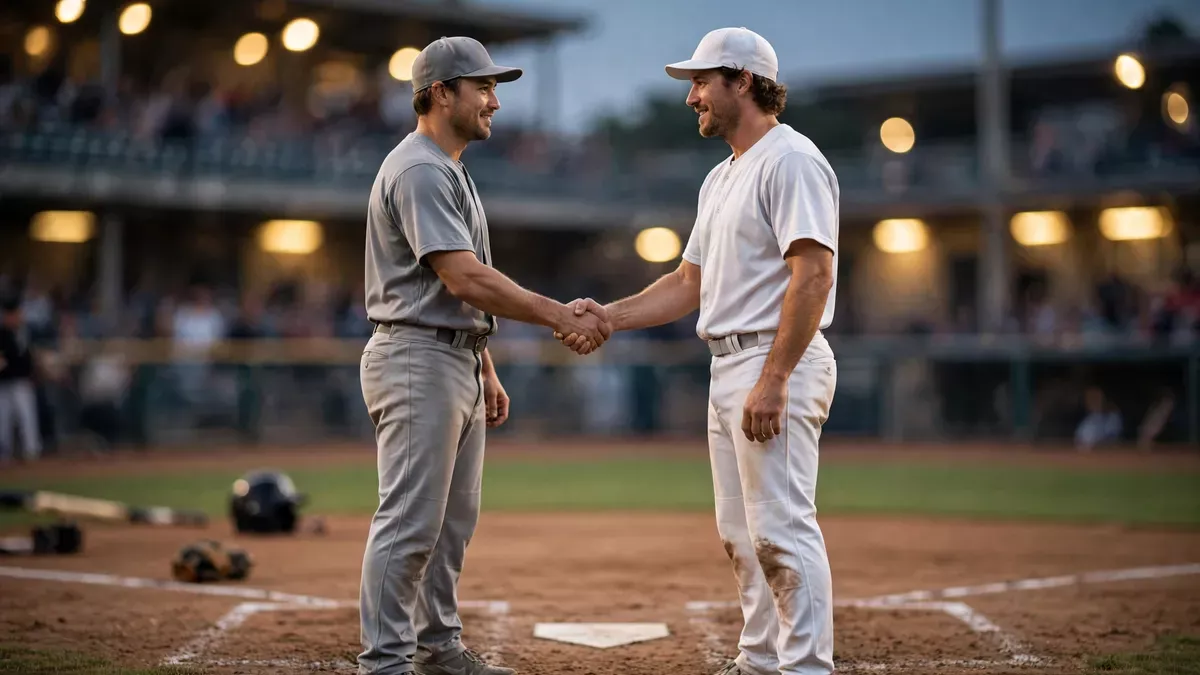
For most of baseball history, the American and National Leagues were less like conferences and more like rival countries: the NL founded in 1876, the AL in 1901, each with its own president, office, umpire crews and rulebook, meeting only in the All-Star Game and the World Series. Nearly all of that is gone. The league presidents were abolished in 2000 when the two merged into a single Major League Baseball office; umpires unified the same year; interleague play (begun in 1997) became an everyday feature in 2013 when Houston’s move to the AL balanced the leagues at 15 teams each; the designated hitter — the last great rules difference, born in the AL in 1973 — became universal in 2022; and the 2023 balanced schedule made every team play every other team every season. What remains of the divide is structural and cultural: separate standings and playoff brackets (six qualifiers per league), separate League Championship Series, separate MVP and Cy Young Awards, the All-Star Game’s league-versus-league format, and a century of distinct identity — the NL is still the “Senior Circuit,” the AL the “Junior Circuit,” and pennants still fly under league names. This guide traces what divided them, what merged, and what still matters.
Key Takeaways
- Founded: NL 1876 (“Senior Circuit”), AL 1901 (“Junior Circuit”). They operated as near-separate organizations until merging under one MLB office in 2000.
- The leagues once had separate presidents, staffs, umpire crews and even subtly different baseballs and strike-zone cultures.
- The DH (AL 1973, universal 2022) was the last playing-rules difference. Today the rulebook is identical in both leagues.
- Interleague play: special event in 1997, everyday fabric since 2013 (15 teams per league after Houston switched). The 2023 schedule made every club play all 29 others annually.
- Still separate: standings tables, wild-card races, ALCS/NLCS pennants, per-league awards and leaderboards, and the All-Star Game matchup.
- Strategic consequence: with the same rules and a balanced schedule, “league identity” now lives in ballparks, histories and fan culture more than in how the game is played.
Two leagues, two countries (1876–1999)
The National League was baseball’s establishment — the surviving circuit from the sport’s first professional era — when Ban Johnson’s American League declared itself a rival major league in 1901, raided NL rosters with bigger contracts, and forced a peace treaty: the first World Series in 1903. For the next 97 years the leagues ran parallel worlds. Each had its own president and headquarters; AL and NL umpires were separate staffs with separate gear and habits (the AL’s outside chest protector survived into the 1970s); the leagues played by mostly shared rules but guarded their differences jealously — none bigger than the designated hitter, adopted by the AL in 1973 and rejected by the NL for 49 years, the subject of our DH guide. Teams from the two leagues didn’t share a field in games that counted from April to September; a player could spend a 20-year career and face the other league only in October. That separation built the mythology: league pride at the All-Star Game was real, and “National League baseball” — bunts, hit-and-runs, pitchers hitting — versus “American League baseball” — the DH, the big inning — described genuinely different products.
The long merger (2000–2023)
The merger arrived in installments. In 2000, the league offices were dissolved into a single MLB administration and umpiring unified under one supervisor — an administrative change fans barely noticed that quietly ended the two-country era. Interleague play, introduced as a novelty in 1997, normalized cross-league games but kept an unbalanced schedule heavy with “natural rival” series. Realignment in 2013 — Houston moving from the NL Central to the AL West, making 15 teams per league — forced interleague series into every week of the season. The universal DH in 2022 removed the last rules difference, and the 2023 balanced schedule completed the logic: each club now plays 52 games against its four division rivals (down from 76), 64 against the rest of its league, and 46 interleague games — at least one series against every team in the other league, every year. The standings still sort by league, because the postseason still does — but the regular-season product is now, for the first time in the sport’s history, one league in everything but name. Our upcoming guide to the MLB schedule breaks down that 162-game architecture in full.
What actually remains of the divide
The pennant structure. October is still two tournaments, not one: each league sends six teams to its own bracket, the ALCS and NLCS crown league champions, and the World Series remains a meeting of strangers relative to any other sport’s final — the feature our playoffs pillar maps in full. Awards and records. MVP, Cy Young, Rookie of the Year, batting titles and league leaderboards are still awarded per league — a hitter “leads the National League” in home runs, and a switch of leagues midseason resets his leaderboard life. The All-Star Game still pits AL against NL (and for decades decided World Series home-field advantage, a quirk retired after 2016). Identity and culture. Ballparks, broadcast voices, retired numbers and century-old rivalries are league-flavored; a Cubs fan and a White Sox fan inhabit the same city and different baseball nations. And one competitive wrinkle survives: because playoff spots are allocated per league, a strong division in one league and a weak one in the other can send a lesser team to October while a better record stays home — the last argument the old divide still wins. Follow both races all season at our MLB hub.
Does the divide still shape how teams are built?
In subtle ways, yes — mostly through the postseason’s architecture rather than the rulebook. Because each league’s bracket is self-contained, front offices build against their own league’s field: an AL club’s October path historically ran through different roster problems (deeper DH-powered lineups) than an NL club’s, and even with identical rules, the composition of each league’s contenders — its parks, its dominant pitching staffs, the altitude in Colorado versus the marine layer in San Diego — keeps the strategic environments distinct. Park effects do more of the differentiating work now than league rules ever did, which is why our stats pillar park-adjusts everything. The trade market treats the leagues as one pool — deadline deals cross league lines freely and always have — but the qualifying-offer and compensation system in our free agency guide still attaches by league of the signing club for draft-pick placement details. The honest summary: the AL–NL divide today is a tournament structure, an awards system and a memory. The memory, in a sport that sells its own history harder than any other, may be the most durable of the three.
AL vs NL FAQ
Are the rules different in the AL and NL now?
No. Since the universal DH arrived in 2022, both leagues play under an identical rulebook — the first time in the sport’s history that has been true.
When did interleague play start?
In 1997, as a limited mid-season feature. It became a season-long, everyday part of the schedule in 2013 after realignment balanced the leagues at 15 teams each.
Why did the Houston Astros switch leagues?
To balance the leagues at 15 teams each (enabling daily interleague play) during the 2013 realignment, Houston moved from the NL Central to the AL West as part of the club’s sale approval.
Do the leagues still have their own presidents?
No. The separate league offices and presidencies were abolished in 2000, when administration merged under the Commissioner’s office and umpire crews unified.
Why is the NL called the Senior Circuit?
Because it predates the AL by 25 years (1876 vs. 1901). The AL is correspondingly the “Junior Circuit” — nicknames that survive in baseball writing today.
Does league still matter for the playoffs?
Yes — completely. Playoff qualification, seeding and the League Championship Series are all contained within each league; the AL and NL champions meet only in the World Series.
Related reading
The divide’s last rulebook battle is told in our designated hitter guide, and its October consequences are mapped in our MLB playoffs pillar.
Corrections: if you spot an error in this guide, tell us through our Corrections Policy page and we will check it against official sources.