
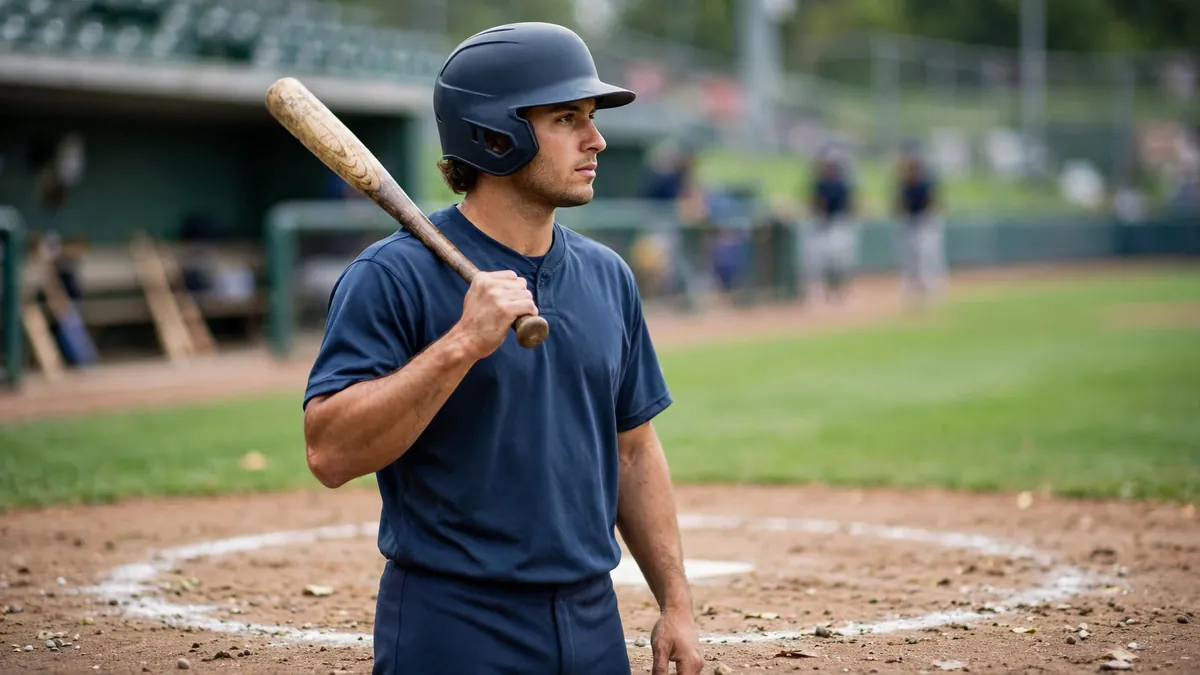
The designated hitter (DH) is a player who bats in place of the pitcher without playing a defensive position. The American League adopted the rule in 1973 — Ron Blomberg of the Yankees became the first DH that April, drawing a bases-loaded walk — as an offense-boosting experiment, and the two leagues then played by different rules for nearly half a century: AL pitchers never batted, NL pitchers always did, and interleague and World Series games used the home league’s rule. The split finally ended with the 2022 collective bargaining agreement, which made the DH universal. The rule extended careers (Edgar Martinez and David Ortiz became Hall-of-Fame DH specialists), erased the NL’s beloved double switch, and produced one modern addendum: the “Ohtani rule,” letting a starting pitcher who also serves as DH stay in the batting order after leaving the mound. This guide explains the mechanics, the 49-year divide, and what unification changed.
Key Takeaways
- The DH bats for the pitcher and plays no defense; he must be named in the lineup card before the game.
- The AL adopted the DH in 1973; the NL resisted until the universal DH arrived in the 2022 CBA (after a trial in the shortened 2020 season).
- If the DH moves into a defensive position, the DH role is lost and the pitcher (or a pinch hitter) must bat in that lineup spot.
- The Ohtani rule (2022): a starting pitcher listed as DH can keep batting as DH after being relieved on the mound.
- Strategy trade: the DH removed automatic-out lineup spots and the double switch; critics lost pitcher-at-bat tactics, supporters gained offense and longer careers for elite bats.
- Before 2022, interleague and World Series games used the DH only in American League parks.
How the DH works mechanically
The DH is declared on the pregame lineup card and hits in the pitcher’s spot all game unless substituted — a pinch hitter for the DH simply becomes the DH. The rigidity is in the fine print. The DH cannot enter the game defensively without cost: if he takes a fielding position, the team loses the DH for the rest of the game, and the pitcher (or a substitute) must bat in the departed fielder’s spot. Likewise, if the pitcher himself pinch-hits or pinch-runs for the DH, the DH is terminated. Managers therefore treat the spot as fixed — a pure hitting role, typically filled by a middle-of-the-order bat who is resting a minor injury, an aging slugger whose glove no longer plays, or a rotating cast giving regulars half-days off. The 2022 Ohtani rule carved out the two-way exception: a player who starts as both pitcher and DH is treated as two roles for substitution purposes, so when he leaves the mound he remains the DH — a provision written for Shohei Ohtani’s unprecedented two-way career and now available to any club with a genuine two-way player.
1973 and the great divide
The AL adopted the DH amid an offense-starved era — the late 1960s had cratered scoring, and AL owners wanted runs and a home for aging stars whose bats outlived their gloves. It worked as designed: AL lineups deepened instantly, and the position evolved from a veteran’s landing spot into a lineup pillar. The NL’s refusal became its identity: pitchers bunting, managers juggling double switches (replacing a pitcher and a position player together to delay the pitcher’s next at-bat), and the endless strategic debate every time the ninth spot loomed in a close game. The divide produced decades of World Series asymmetry — the DH existed only in AL parks, so NL clubs had to invent a DH in October and AL pitchers had to pick up bats they hadn’t swung all year. Interleague play from 1997 preserved the same split. Universality arrived in stages: the pandemic-shortened 2020 season trialed the NL DH, and the 2022 CBA made it permanent, ending 49 years of two-rule baseball in one stroke.
What unification changed
Strategy: the double switch is now a museum piece, and NL bench construction shifted from pinch-hitting depth toward platoon bats for the DH rotation. Rosters and money: thirty everyday DH jobs doubled the market for bat-first players — the free-agency implications run through our MLB free agency guide — and extended the earnings tail for sluggers into their late thirties. Pitching: with no at-bats to survive, pitchers specialized further, and the spectacle of a hurler helping himself — Madison Bumgarner’s home runs, Bartolo Colón’s immortal 2016 shot at age 42 — passed into highlight-reel history. The debate’s afterlife: purists still argue something human left the game; the counterfactual is in the numbers fans already know — pitchers were hitting barely above .100 with soaring strikeouts in the DH’s final NL years, a rally-killing profile modern offenses happily retired. Japan offers the control experiment: its Pacific League uses the DH, its Central League still doesn’t, and the argument thrives there exactly as it did here. For the rule’s modern siblings — the clock and the shift limits that reshaped the same era — see the next guide in our MLB series, and follow the season on our MLB hub.
The DH as a career and a craft
The role created a new baseball profession. The great full-time DHs describe a discipline unlike any other job in sports: four or five at-bats scattered across three hours, with the rest spent riding a stationary bike, studying video and hitting in the cage to stay loose — producing in cold bursts, with no defensive play to shake off a bad at-bat. Edgar Martinez turned that routine into a .312 career average and a Hall of Fame plaque; the award for the league’s best DH is named for him. David Ortiz made the role a franchise’s heartbeat in Boston, and Harold Baines’ election confirmed voters had made peace with the specialist. The craft cuts the other way for ordinary players: many hitters perform measurably worse on DH days than in games where they play the field, which is why modern managers rotate the spot — a star’s half-rest, a platoon advantage, a rehabbing regular’s soft landing — rather than naming one permanent DH. The “rotating DH” also hedges injury risk: lose a full-time DH in April and the lineup has a hole; lose one of five rotating options and the machine barely notices. Both models won World Series in the universal era, and the argument over which is wiser is now the rule’s friendliest remaining debate.
Designated hitter FAQ
When did the designated hitter start?
In the American League in 1973, initially as a three-year experiment that simply never ended. The first DH was Ron Blomberg of the New York Yankees, on April 6, 1973.
When did the National League get the DH?
Permanently in 2022 under the new collective bargaining agreement, after a one-season trial in 2020. From 1973 to 2021 the NL played without it.
Can a DH play defense later in the game?
Yes, but the team then loses the DH: the pitcher (or a pinch hitter) must bat in the spot of the player the DH replaced in the field for the rest of the game.
What is the Ohtani rule?
A 2022 rule allowing a starting pitcher who is also his team’s DH to remain in the game as the designated hitter after he is removed as pitcher — designed for two-way players like Shohei Ohtani.
Do DHs make the Hall of Fame?
Yes — Edgar Martinez and David Ortiz were elected largely as designated hitters, and Frank Thomas spent much of his career at DH, establishing the role as a legitimate path to Cooperstown.
Why did the NL resist for so long?
Tradition and strategy: the league valued the managerial chess of the pitcher’s spot — bunts, pinch hitters and double switches — and its owners voted the DH down repeatedly until the 2022 labor deal traded it in.
Related reading
The DH’s payroll ripple effects are in our free agency guide, and the pitchers who no longer bat are measured in our stats pillar.
Corrections: if you spot an error in this guide, tell us through our Corrections Policy page and we will check it against official sources.