
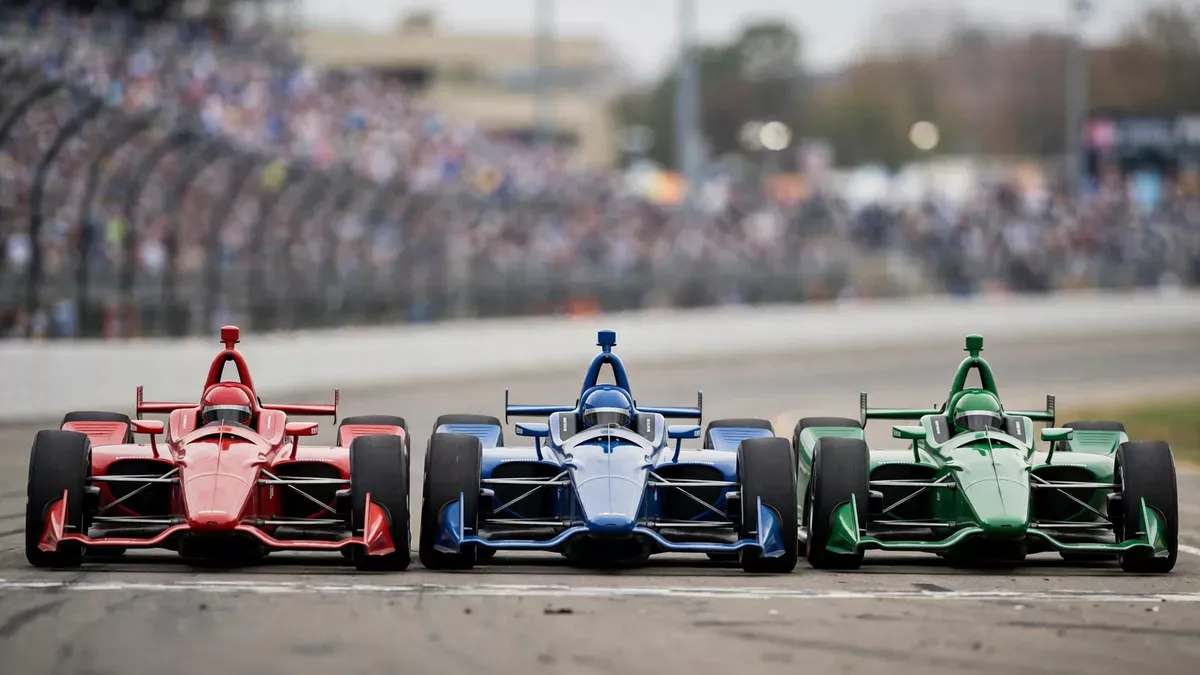
The Indianapolis 500 is the biggest race in American motor sport and one of the most famous sporting events in the world. Run every year on the Sunday of Memorial Day weekend at Indianapolis Motor Speedway in Indiana, it is a 500-mile race — 200 laps of a 2.5-mile oval — contested by a field of 33 cars starting three abreast in 11 rows. The 2026 race, the 110th Running, was held on Sunday, May 24, 2026, with the green flag at 12:45 p.m. ET, and it was won by Felix Rosenqvist by 0.0233 seconds — the closest finish in the race’s history.
The race is the centerpiece of the IndyCar season and the oldest event of its kind: the first Indianapolis 500 was run in 1911, won by Ray Harroun in the Marmon Wasp. The track was paved with bricks in 1909, and a strip of the original bricks still marks the start-finish line — which is why the winning driver kisses the bricks after the race. This guide explains how the race works: the field, the qualifying, race day itself, and the traditions that make it unlike any other race.
Key Takeaways
- The Indianapolis 500 is 200 laps of the 2.5-mile Indianapolis Motor Speedway oval — 500 miles, run on the Sunday of Memorial Day weekend.
- The field is 33 cars, starting three abreast in 11 rows of three — the largest starting field in top-level open-wheel racing.
- Qualifying is unique: each driver makes a four-lap run, and the average speed across those four laps decides the grid. It runs over two days, ending in a Top 12 and a Firestone Fast Six shootout for pole.
- The 2026 race was the 110th Running, held on Sunday, May 24, 2026, and won by Felix Rosenqvist by 0.0233 seconds, the closest finish ever.
- The traditions are part of the event: the winner drinks milk in Victory Lane, kisses the yard of bricks, and has his face sculpted onto the Borg-Warner Trophy.
The basics: 500 miles, 33 cars, three wide
The numbers are the race’s identity. The Indianapolis Motor Speedway oval is exactly 2.5 miles around — four long straights and four turns, each banked at 9 degrees — so 200 laps makes 500 miles. A winning time is usually just under three hours, with average speeds above 170 mph and qualifying speeds above 230 mph. In 2026, pole winner Álex Palou qualified at 232.248 mph, and the cars are capable of nearly 240 mph on the straights.
The field is 33 cars, a number fixed by tradition: 33 is the number of pit boxes that fit along the front straight when the race began, and it has stayed ever since. They start in 11 rows of three, which makes the start itself a spectacle — 33 cars, three wide, accelerating from a rolling start behind the pace car.
The race is the showcase event of the IndyCar season, but it is also a championship round like any other: the 500 pays the same points as every other race on the calendar, 50 for the win on the standard scale. What it pays in prestige is unmatched — drivers will tell you that winning the Indianapolis 500 matters more than winning the championship.
The month of May
The Indianapolis 500 is not a weekend; it is a month. The event builds across May, with practice opening in the second week of the month, qualifying on the weekend before the race, and a full schedule of support events, concerts and ceremonies in between. The week of the race includes Carb Day — the final practice session, traditionally held on the Friday before the race — and the famous pre-race ceremonies on Sunday morning.
The track itself is the largest sporting venue in the world by capacity, and the race draws one of the largest single-day crowds in all of sport. The pre-race ceremonies lean into the Memorial Day holiday: a flyover, the singing of “Back Home Again in Indiana,” and the command to start engines.
In 2026 the race was broadcast on FOX, in the network’s second year as the broadcaster after taking over from NBC in 2025. Pre-race coverage began at 10 a.m. ET, with race coverage from 12:30 p.m. and the green flag at 12:45 p.m.
Qualifying: the four-lap run
Indianapolis 500 qualifying is the most distinctive qualifying format in motor sport, and it takes two days. Every qualifying run consists of four consecutive timed laps, and it is the average speed across those four laps — not the time of a single lap — that determines a driver’s starting position. A driver who is fast for one lap but fades will lose out to a driver who is consistent across all four, which is why the format rewards a car that is quick and stable rather than one that is fast for a single flying lap.
For 2026, the format added a new intermediate round. On the Saturday, every car gets a qualifying attempt, with the running order decided by a blind draw. After the first round of attempts, teams can choose between two lanes at pit exit for further attempts: Lane 1 gives priority access to the track but requires the driver to withdraw his previous time, while Lane 2 lets a driver keep his time and try to improve it. At the end of Saturday, the nine fastest drivers are locked directly into Sunday’s Top 12 session, drivers in 10th to 15th advance to a new Final 15 round, and positions 16 to 33 are set.
On Sunday, the Final 15 drivers each get one four-lap attempt, and the three fastest join the nine already locked in to complete the Top 12. Those 12 then make another four-lap run in reverse order of speed, and the six fastest advance to the Firestone Fast Six — a final four-lap shootout, again in reverse order, that decides pole position and the first two rows. The pole winner earns 12 championship points, with points awarded down to 1 point for the 12th-fastest qualifier.
One thing that did not happen in 2026: bumping. When more than 33 cars enter, the slowest qualifiers are bumped from the field, and a last-chance session decides the final places. With exactly 33 entries in 2026, there was no bumping and no last-chance qualifying — every car that completed a run started the race.
Race day: how 500 miles unfolds
The race begins with a rolling start behind the pace car. After pace laps, the pace car pulls off and the field accelerates to the green flag in three-wide formation — 33 cars, 11 rows, all arriving at the start-finish line together. The first lap is the most dangerous of the day: cold tires, full fuel tanks, and a pack running three wide at more than 220 mph.
From there, the race is a long exercise in drafting, fuel saving and pit strategy. The cars run in packs on the straights, using the tow from the car ahead to gain speed, and the lead changes hands dozens of times. A driver who leads too early can burn too much fuel; a driver who sits back and saves fuel can find himself with the pace to win at the end. The fuel window — how many laps a car can run on a full tank — decides when the pit stops fall, and a yellow flag at the wrong moment can ruin a strategy or rescue one.
Pit stops are fast and frequent — a car stops roughly every 30 laps for fuel and tires — and the pit lane is long and narrow, with 33 boxes in a row and a strictly enforced speed limit. The final stops come with around 20 laps to go, and from there it is a sprint to the finish, with the lead pack usually still several cars deep.
The finish is what the race is famous for. Because the draft is so powerful, the leader on the last lap is often the most vulnerable car on the track: the cars behind get a tow down the straights, and the winner is frequently decided in the final corner or on the run to the line. The 2026 finish — Rosenqvist beating David Malukas by 0.0233 seconds — was the closest in the race’s 110 runnings, but close finishes are the norm, not the exception.
The traditions
The Indianapolis 500 is as much a ceremony as a race, and the traditions are older than most of the sport itself.
The milk. The winner drinks milk in Victory Lane, a tradition dating to 1936, when Louis Meyer asked for buttermilk after winning. The winner chooses whole, 2% or skim milk in advance, and the bottle is waiting in Victory Lane.
The Borg-Warner Trophy. The winner’s face is sculpted in sterling silver onto the Borg-Warner Trophy, which has carried the winners’ likenesses since 1936. The trophy itself stays at the Speedway; the winning driver receives a smaller replica, known as the Baby Borg.
The bricks. The start-finish line is a yard of the original bricks from 1909, and the winning driver and team kneel to kiss the bricks after the race — a tradition that began in 1996 and is now one of the most recognizable images in motor sport.
The songs and the command. The pre-race ceremony includes the singing of “Back Home Again in Indiana,” the command “Drivers, start your engines,” and a flyover. The race is traditionally held on Memorial Day weekend, and the ceremonies honor the holiday as well as the race.
Why it matters
The Indianapolis 500 matters because it is the oldest and most prestigious race in IndyCar, the biggest single-day sporting event in the United States, and the race that defines the series to the rest of the world: the month of May at Indianapolis is when IndyCar gets its largest audience and its most new fans. For a new fan, it is also the easiest IndyCar race to follow — 200 laps, 500 miles, first to the line — with the draft keeping the field together, the pit stops keeping the strategy live, and the finish almost always close.
Indianapolis 500 FAQ
Why 33 cars?
Thirty-three is the number of pit boxes that fit along the front straight when the race began, and the field size has been fixed at 33 by tradition ever since. The cars start in 11 rows of three.
How does Indianapolis 500 qualifying work?
Each driver makes a four-lap run, and the average speed across the four laps decides the grid. Qualifying runs over two days: Saturday sets most of the field and locks the top nine into Sunday’s Top 12, and Sunday’s Top 12 and Firestone Fast Six decide pole position and the first two rows.
What is bumping?
When more than 33 cars enter, the slowest qualifiers are bumped from the field. In 2026 there were exactly 33 entries, so there was no bumping and every car that qualified started the race.
Why does the winner drink milk?
The tradition dates to 1936, when winner Louis Meyer asked for buttermilk. The winner now chooses whole, 2% or skim milk in advance, and drinks it in Victory Lane.
Related reading
More from our Motorsports hub (/motorsports/): how IndyCar works (/how-indycar-works/), how Formula 1 works (/how-formula-1-works/), and the scores (/motorsports/scores/), schedule (/motorsports/schedule/) and standings (/motorsports/standings/) pages that follow the season round by round.
Corrections: if you spot an error in this guide, tell us through our Corrections Policy (/corrections-policy/) page and we will check it against official sources.