
A tied NHL game never ends tied. If the score is level after three 20-minute periods, the game goes to overtime, and if overtime cannot settle it, to a shootout. The winner takes two points in the standings and the loser takes one — but the way the extra time is played, and what happens in the playoffs, is completely different.
This guide explains the regular-season format — five minutes of 3-on-3 sudden death, then a shootout — the rules that govern both, and why the playoffs throw the whole system away in favor of full-length sudden-death periods.
Key Takeaways
- A regular-season game tied after 60 minutes goes to a five-minute, 3-on-3 sudden-death overtime period.
- If nobody scores in overtime, a shootout decides the game: three shooters per side, then sudden-death rounds.
- The winner gets 2 standings points; the loser gets 1 point for reaching overtime, so a game that goes past regulation hands out 3 points in total.
- In the playoffs there is no 3-on-3 overtime and no shootout — tied games are decided by repeated full 20-minute, 5-on-5 sudden-death periods.
- A goalie pulled for an extra attacker in overtime who concedes an empty-net goal costs their team the point it banked by reaching overtime, unless the goalie was pulled for a delayed penalty.
The overtime format: five minutes, 3-on-3, sudden death
Overtime in the regular season is five minutes of sudden death, played 3-on-3: three skaters and a goalie per side. The first goal wins the game immediately. If neither team scores in the five minutes, the game moves to a shootout.
The 3-on-3 format, introduced for the 2015-16 season, replaced the old 4-on-4 overtime. The open ice changes the game completely. With only three skaters per side, possession matters more than position: teams will carry the puck back into their own zone and regroup rather than dump it in and chase, because a turnover with so much space is far more likely to produce a breakaway the other way. Coaches typically use their most skilled forwards and a mobile defenseman, and line changes happen on the fly, often mid-rush.
Overtime starts with a faceoff at center ice. Teams switch ends from the third period, so they attack the same goal their bench defends for the second time in the game. Penalties in overtime are handled carefully: a minor penalty leaves the penalized team a skater down, so play becomes 4-on-3, and a second penalty can make it 5-on-3. A team is never reduced below three skaters, so the power play is capped accordingly.
The point both teams banked by reaching overtime matters here. The moment regulation ends tied, each team is credited with one standings point. The overtime winner earns the second point. That is why the loser of an overtime or shootout game still shows up in the standings with something to show for the night — and why a game that goes past regulation distributes three points between the two teams instead of two.
Pulling the goalie in overtime — and the point at risk
A coach trailing late in regulation will pull the goalie for an extra attacker, but pulling the goalie in overtime is a different calculation, because the point is at stake.
If a team pulls its goalie in overtime and concedes an empty-net goal, it loses the point it banked by reaching overtime. The team finishes the night with nothing, while the winner takes two points. The exception is when the goalie comes off for a delayed penalty — if the opposition is about to be penalized, the team may add an extra attacker without risking the point, because the whistle would have stopped play anyway.
That rule shapes late overtime. A team that is already safe in the standings race might gamble; a team fighting for a playoff spot almost never pulls its goalie in overtime, because the guaranteed point is often worth more than the small chance of a second.
The shootout: three rounds, then sudden death
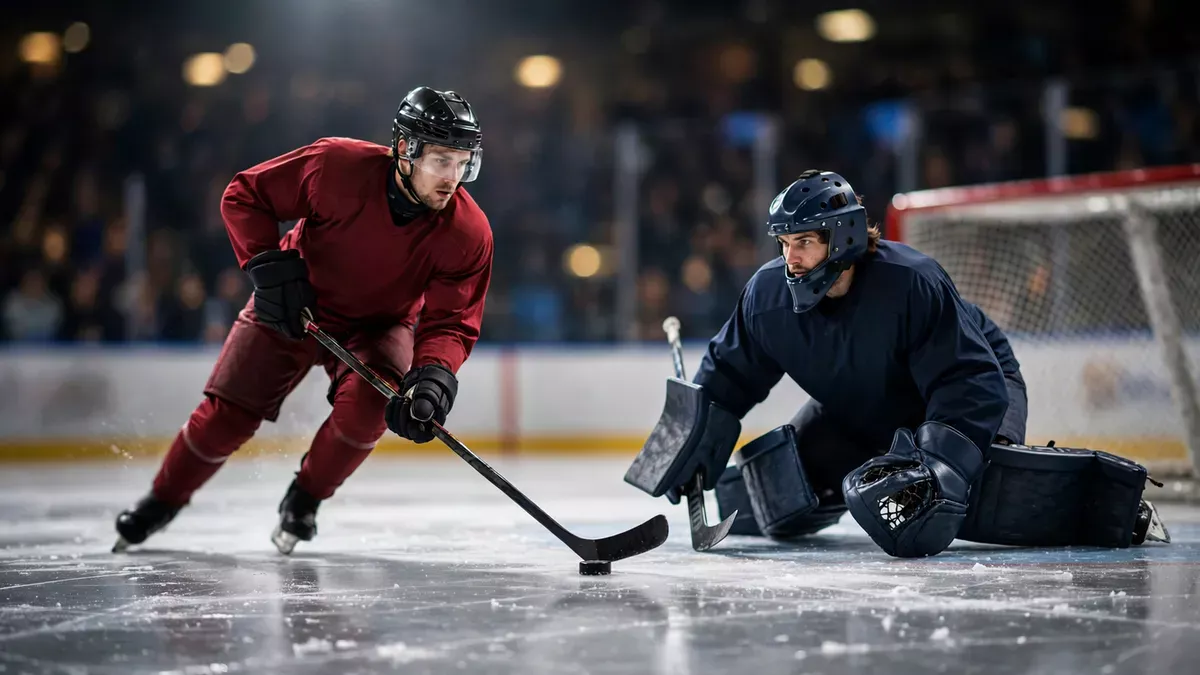
If five minutes of 3-on-3 produces no goal, the game is decided by a shootout. Each team picks three shooters. They alternate attempts, one shooter at a time, against the opposing goalie. The team with more goals after three rounds wins. If the score is still tied after three rounds, the shootout continues in sudden-death rounds: each team takes one shot per round, and the first round in which one team scores and the other does not ends the game.
A few rules govern the shootout:
- No shooter may take a second attempt until every eligible skater on their team has taken one. Coaches therefore order their shooters carefully, saving a specialist for the sudden-death rounds if they can.
- The shooter starts at center ice and must keep the puck moving forward toward the goal. A shot that stops, or a shooter who loses control and doubles back, ends the attempt.
- The puck must cross the goal line to count. A goalie who stops it, or a shot that hits the post and stays out, is a miss.
- The shootout winner is credited with one extra goal in the final score — a 3-2 shootout win is recorded as a 4-3 final score, for example. But the goal is not credited to the shooter personally, and the losing goalie is not charged with a goal against. The shootout is a team result, not an individual statistic.
Shootouts have decided games since the 2005-06 season, when the league abolished ties. Before that, a game that ended level after overtime simply ended level, and both teams took a point. The shootout guarantees a winner every night, which is why the standings column for overtime losses exists at all.
What changes in the playoffs: no shootout, ever
The playoffs use none of this. A playoff game tied after 60 minutes is decided by full 20-minute overtime periods, played 5-on-5, exactly like regulation, repeated until someone scores. There is no 3-on-3, no five-minute limit, and no shootout.
That is why playoff overtime has its own mythology: games stretching to double, triple and even more overtimes, players logging the ice time of two games in one night, and goaltenders facing shot totals that would be unthinkable in regulation. The first goal wins, instantly, whenever it comes.
The contrast is deliberate. The regular-season format is built for a schedule: 82 games per team, games on consecutive nights, and a need to finish on time. The playoff format is built for the stakes: when a series and a season are on the line, the league wants the game itself — not a skills competition — to decide it.
Why fans argue about it
The shootout is the most debated part of the system. Its defenders say it guarantees a winner, rewards skill, and gives fans a dramatic finish. Its critics say a team game should not be settled by a one-on-one contest, and that the extra point handed to the shootout loser distorts the standings — a team can collect points all season by reaching overtime and losing, while a team that wins in regulation gets no more than the same two points.
That distortion is real, and it is visible in the standings every spring: because games that go past regulation hand out three points instead of two, the total points in the league rise through the season, and the race for the last playoff spots often comes down to the tiebreakers in our guide to how NHL standings work. The system rewards reaching overtime, and coaches manage the third period of a tied game accordingly — protecting the guaranteed point is often worth more than gambling for the second.
How NHL overtime works FAQ
How long is NHL overtime in the regular season?
Five minutes, played 3-on-3, sudden death. If nobody scores, the game goes to a shootout.
How does an NHL shootout work?
Three shooters per side alternate attempts. The team ahead after three rounds wins; if tied, sudden-death rounds follow until one team scores and the other does not.
How many points does the loser get in overtime?
One point. The winner gets two points, so a game that goes past regulation awards three points in total.
Is there a shootout in the NHL playoffs?
No. Playoff games tied after regulation are decided by repeated full 20-minute, 5-on-5 sudden-death periods until someone scores.
Can a team lose its overtime point?
Yes, in one case: if a team pulls its goalie in overtime and concedes an empty-net goal, it loses the point it banked by reaching overtime — unless the goalie was pulled for a delayed penalty.
When did the NHL introduce 3-on-3 overtime?
For the 2015-16 season, replacing the previous 4-on-4 format. The shootout itself arrived in 2005-06, when ties were abolished.
Related reading
Follow the league on our NHL hub (/nhl/), scores page (/nhl/scores/), schedule (/nhl/schedule/) and standings (/nhl/standings/), and learn how the points race is decided in our guide to how NHL standings work.
Corrections: if you spot an error in this guide, tell us through our Corrections Policy (/corrections-policy/) page and we will check it against official sources.