
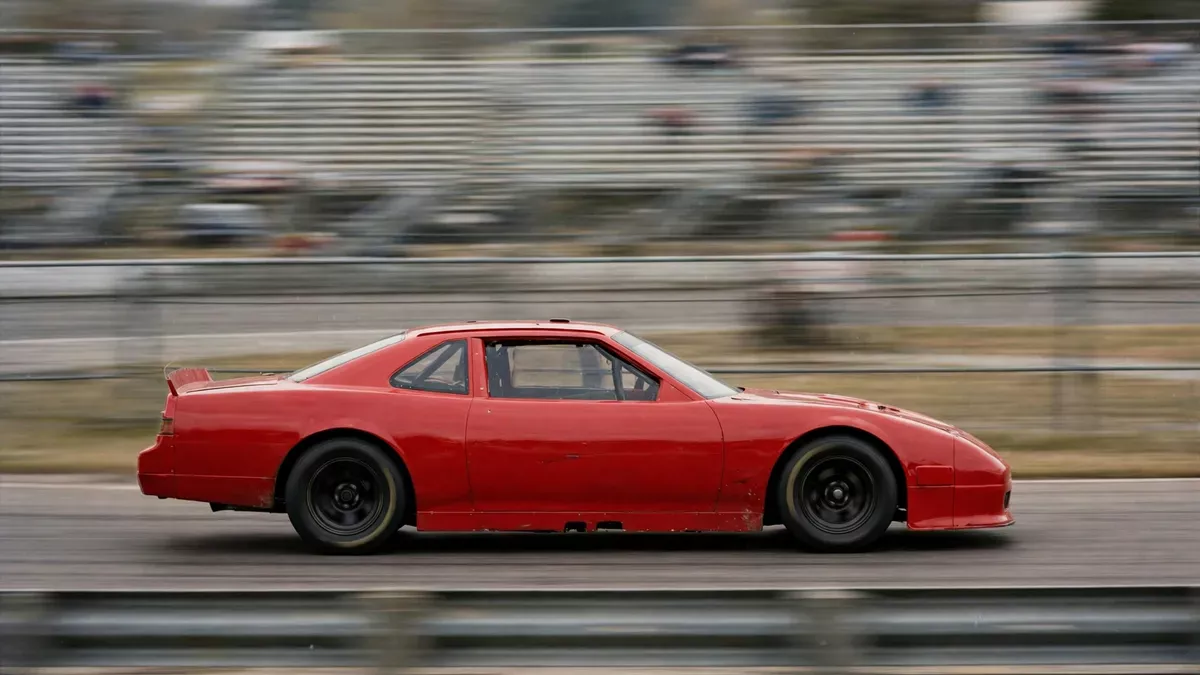
NASCAR sets its starting grid with single-car time trials at most tracks: each car runs alone against the clock — one timed lap at most ovals, two at the shortest tracks — and the fastest lap takes pole position. Superspeedways use a two-round shootout, road courses use timed group sessions, and the Daytona 500 has its own unique system: single-car qualifying to set the front row, then two 150-mile Duel races that set positions 3 through 40.
Qualifying in NASCAR is simpler than in Formula 1 and more varied than in any other major series, because the format changes with the track. This guide walks through each version, explains how the field is divided, and covers the Daytona 500’s Duels — the only qualifying races in American motor sport.
Key Takeaways
- At most tracks, qualifying is a single-car time trial: one timed lap per car at most ovals, two laps at the shortest tracks (Bristol, Martinsville, Dover and Richmond). Fastest lap takes pole.
- Superspeedways (Daytona, Talladega and Atlanta) use two rounds: every car takes one lap, the fastest ten advance, and a second lap sets the top ten.
- Road courses keep group qualifying: the field is split into two groups, each gets a 20-minute timed session, and the fastest laps set the grid.
- The Daytona 500 is unique: single-car qualifying locks in only the front row, and two 60-lap Duel races set positions 3 through 40.
- The field is 40 cars: 36 chartered entries are guaranteed a spot, and four open entries must race their way in.
The standard format: one lap, alone
NASCAR overhauled qualifying for the 2025 season, replacing the multi-car group knockout sessions used at most tracks with single-car time trials. The format is now as simple as motorsport gets: cars are released one at a time, each driver gets a warm-up lap to build speed, and then a single timed lap. At the shortest ovals — Bristol, Martinsville, Dover and Richmond — each car gets two timed laps, with the best lap counting, because a single lap on a half-mile track is over in about 20 seconds.
There is one round and no second chance. The fastest lap of the session wins pole position, and the rest of the grid lines up in lap-time order. Groups still exist behind the scenes: the field is split into two groups based on a performance metric drawn from recent results — fastest laps, race finishes and owner points — which decides the order cars are released, with the faster group going first. But unlike the old format, there is no knockout: every car gets its lap, and the times decide everything.
Superspeedways: two rounds, one lap each
Daytona, Talladega and Atlanta keep a two-round shootout, because at a superspeedway the lap is long and track conditions change quickly. Every car takes one timed lap in Round 1. The ten fastest advance to Round 2, where they take one more lap each, and the fastest lap in that round takes the pole. Positions 11 through 40 are set by the Round 1 times.
Single-car running matters more at a superspeedway than anywhere else. In the race, cars run in huge drafting packs and a driver’s speed depends on who is around them; in qualifying, alone on the track, it is just the car and the driver. A pole at Talladega is a pure speed award — and, since drafting decides the race, it is no guarantee of anything on Sunday.
Road courses: groups and a timed session
Road courses keep the group format, because a road course lap takes over a minute and the track is long enough for many cars to run at once. The field is split into two groups, and each group gets a 20-minute timed session in which drivers can run as many laps as they like. The fastest lap in the session sets the grid order. Wet-weather tires are available at road courses, and at most ovals a mile or shorter, if rain arrives — with the exception of the high-banked concrete tracks at Bristol and Dover.
The Daytona 500: qualifying, then the Duels
The Daytona 500, the season opener, has a qualifying procedure unlike any other race on the calendar. It runs in two steps over two days.
Step 1: single-car qualifying. On the Wednesday before the race, each car takes one timed lap around the 2.5-mile superspeedway, and the ten fastest advance to a second round for one more lap. Only two positions are locked in: the fastest driver takes the pole, and the second-fastest takes the outside of the front row. Everyone else is qualifying for placement in the Duels, not for a Daytona 500 starting spot.
Step 2: the Duels. On Thursday night, the field is split into two 60-lap, 150-mile qualifying races — the Duels. Drivers who qualified in odd-numbered positions race in Duel 1, and even-numbered qualifiers race in Duel 2. Duel 1 sets the inside row of the Daytona 500 grid and Duel 2 sets the outside row, filling positions 3 through 40 in finishing order. The Duels also pay points: the top ten finishers in each Duel earn points on the same 10-to-1 scale as stage points, so the winning driver in each Duel banks 10 points before the season has properly begun.
| Step | What happens | What it decides |
|---|---|---|
| Single-car qualifying, Round 1 | Every car, one timed lap; top 10 advance | Duel lineups (odd to Duel 1, even to Duel 2); two fastest open cars lock into the field |
| Single-car qualifying, Round 2 | Top 10, one more lap each | Pole position and outside pole — the front row |
| Duel 1 (60 laps, 150 miles) | Odd qualifiers race | Inside row, positions 3, 5, 7 and so on |
| Duel 2 (60 laps, 150 miles) | Even qualifiers race | Outside row, positions 4, 6, 8 and so on |
Making the field: charters, open teams and the provisional
The Daytona 500 field is 40 cars, and not every team that shows up gets to race. The 36 chartered entries — teams holding a NASCAR charter, the sport’s franchise system — are guaranteed a spot. The remaining four spots go to open teams, cars without a charter that must earn their way in: the two fastest open cars in single-car qualifying lock in on speed, and the other two spots go to the highest-finishing open car in each Duel that has not already qualified. New for 2026, the two open cars that qualified on speed also use their Duel results to set their starting position, rather than starting at the back.
At other races, the same 36-plus-4 arithmetic applies, with the fastest open cars taking the remaining spots on qualifying speed. NASCAR also has an Open Exemption Provisional, introduced in 2025, which can add a 41st car for a world-class driver from another series — a way to guarantee a star entry a place in the field without taking a spot from a regular team.
Why qualifying matters more at some tracks
Pole position in NASCAR is worth less than in Formula 1, and more than it looks. At Daytona and Talladega, where the draft decides everything, qualifying position is nearly irrelevant — the pole-sitter can be 20th by the end of the first lap. At short tracks and road courses, it is worth a great deal: passing is hard at Bristol and Martinsville, and the leader controls the restarts, so starting up front is a genuine advantage.
That is also why qualifying draws a crowd at some tracks and not others. At a short track, the single-car runs are a pure test of a driver and a setup, with nothing to hide behind. At a superspeedway, they are a formality before the real contest — the Duels, or the pack racing on Sunday.
NASCAR qualifying FAQ
How is the starting grid set in NASCAR?
At most tracks, by single-car time trials: one timed lap per car (two at the shortest tracks), fastest lap takes pole. Superspeedways use two rounds, road courses use group sessions, and the Daytona 500 adds the Duel races.
What are the Duels?
Two 60-lap, 150-mile qualifying races held on the Thursday before the Daytona 500. Duel 1 sets the inside row of the grid and Duel 2 the outside row, filling positions 3 through 40. They also pay points to their top ten finishers.
How many cars race in a NASCAR Cup Series race?
Forty: 36 chartered entries with guaranteed spots and four open entries that must qualify in.
What happens if it rains during qualifying?
At road courses and most ovals a mile or shorter, wet-weather tires are available and qualifying can run in the rain. At other tracks, qualifying may be cancelled and the grid set by the performance metric instead.
Does the pole-sitter have an advantage in NASCAR?
It depends on the track. At short tracks and road courses, starting up front matters a lot. At superspeedways, where cars race in drafting packs, it matters very little.
Can a driver who crashes in qualifying still race?
Yes, if the team can repair the car or roll out a backup. The car must pass inspection before the race, and a team that goes to a backup car starts at the rear of the field.
Related reading
More from our Motorsports hub (/motorsports/): how NASCAR works — races, stages and the Chase (/how-nascar-works/), what are stage points in NASCAR (/what-are-stage-points-in-nascar/), and the scores (/motorsports/scores/), schedule (/motorsports/schedule/) and standings (/motorsports/standings/) pages that follow the season round by round.
Corrections: if you spot an error in this guide, tell us through our Corrections Policy (/corrections-policy/) page and we will check it against official sources.