
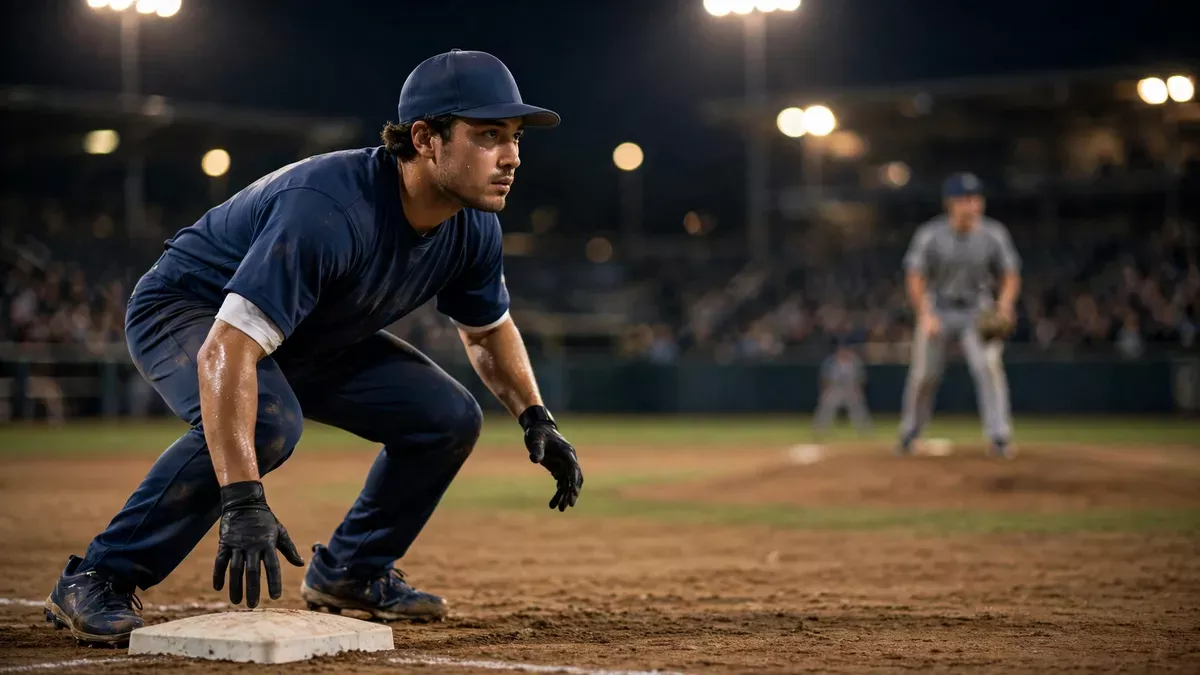
If a major-league game is tied after nine innings, it simply continues — full innings, no clock, no limit — until one team leads after both have batted. But since 2020, regular-season extra innings carry a twist: every half-inning from the 10th onward begins with an automatic runner placed on second base — the “ghost runner,” formally the batter who precedes that half-inning’s leadoff hitter in the batting order. The rule, imported from the minor leagues (where it debuted in 2018) and international play during the pandemic-shortened 2020 season and made permanent for the regular season in 2023, was designed to end marathon games faster and spare bullpens. It does not apply in the postseason, where extras are played the old way — which is how the 2018 World Series produced an 18-inning, seven-hour classic while a July Tuesday now rarely sees a 12th inning. This guide explains the mechanics, the scoring fine print, the strategy it rewrote and the marathon history it was built to prevent.
Key Takeaways
- Extras continue inning by inning until a full inning ends with a leader; MLB regular-season games cannot end in a tie.
- From the 10th inning, each half-inning starts with an automatic runner on second — the player scheduled to bat before the leadoff hitter (a pinch runner may replace him).
- If the automatic runner scores, the run is unearned for the pitcher’s ERA. All other scoring (RBIs, wins and losses) applies normally.
- The ghost runner applies to the regular season only. Postseason extra innings start with the bases empty, as they always have.
- Strategy: the visiting team plays to score at least one; the home team knows its target. Sacrifice bunts became debatable again — advancing the runner guarantees little.
- The rule made long games rarer: most extras now end in the 10th or 11th, versus pre-2020 marathons like the 26-inning 1920 tie and 25-inning 1984 game.
The mechanics and the fine print
The automatic runner is the player in the batting order immediately before the inning’s leadoff hitter — if the No. 3 hitter leads off the 10th, the No. 2 hitter takes second base (and a team may substitute a pinch runner there without burning the original player’s spot beyond the usual substitution rules). Re-entry is not allowed, so if that runner’s turn at bat arrives later in the inning, his replacement bats — the bookkeeping quirk managers must track. For scoring: if the automatic runner comes around to score, the run is charged to the team’s total but recorded as unearned against the pitcher, on the logic that he was placed by rule rather than allowed (the official scorer treats his presence as if he had reached on an error, without anyone being charged one). Batting stats proceed normally — the batter who drives him in earns the RBI, a walk-off hit still ends the game on the spot, and there is no limit to how many extra innings a game can run in theory: the rule just makes deep marathons vanishingly rare in practice, because beginning every frame with a runner in scoring position ends most games within an inning or two. Watch the rule operate on any close night via our MLB scores pages, and note how it never appears in October — the playoffs pillar keeps the traditional format.
Strategy: a run is near, and yet so far
The ghost runner warped extra-inning tactics in ways analysts still argue about. The visiting team’s dilemma opens the inning: bunt the runner to third with one out (guaranteeing a strong chance at exactly one run via a fly ball, but capping the rally), or swing away chasing a crooked number and risk scoring zero? The data era mostly frowns on the sacrifice — the runner already sits in scoring position, and trading an out for 90 feet lowers total scoring expectation — yet managers still bunt in selected spots, especially with weak hitters due up. The home team, batting second, holds the informational edge: if the visitors scored zero, one run wins it and every tactic sharpens toward a single tally; if the visitors scored two, the bunt dies entirely. Defensive craft shifted too: infields play in earlier, pitchers prioritize strikeouts with contact so costly, and bullpen usage from the seventh inning onward now hoards one fresh arm for the 10th. All of it rests on an irony purists savor: the runner nobody earned decides games that the first nine innings couldn’t — hence the “Manfred man” nickname (after the commissioner) that stuck in fan usage. The rule sits in the same modern package — pace, action, earlier endings — as the pitch clock and shift limits detailed in our modern rules guide.
The marathons it replaced
Baseball’s record book mourns and celebrates the old endlessness. The longest major-league game by innings: 26 innings on May 1, 1920, when Brooklyn and the Boston Braves played to a 1–1 tie called by darkness — both starting pitchers, Leon Cadore and Joe Oeschger, went all 26. The longest by time: the White Sox and Brewers’ 25-inning, 8-hour-6-minute epic across two days in May 1984. Postseason baseball, ghost-runner-free to this day, keeps producing its own: the 18-inning World Series Game 3 in 2018 (Dodgers over Red Sox, 7 hours 20 minutes, won on Max Muncy’s homer) and the 18-inning 2022 ALDS game where Houston’s Jeremy Peña homered to complete a sweep of Seattle in a 1–0 final. Japan’s NPB shows the alternative compromise — games there can end in a tie after 12 innings — a concept MLB has never entertained: an official game simply runs until someone wins, suspended only by weather or extraordinary circumstance and resumed later from the exact point of interruption. The ghost runner is MLB’s chosen middle path: no ties, but no more dawn patrols either — regular-season games reaching even the 13th inning have become rarities since 2020, a workload mercy every bullpen in the standings race quietly appreciates.
Extra innings FAQ
What is the ghost runner in baseball?
The automatic runner placed on second base to start every half-inning from the 10th inning onward in regular-season games. “Ghost runner” and “Manfred man” are nicknames; the official term is the automatic runner. It has been permanent for the regular season since 2023.
Is the ghost runner used in the playoffs?
No. Postseason games use traditional extra innings — bases empty at the start of every inning — no matter how long the game runs.
Who is the automatic runner?
The player who precedes the inning’s leadoff hitter in the batting order (the spot that made the last out of the previous inning is a useful memory aid). A pinch runner may be used in his place.
Does the ghost runner’s run count against the pitcher’s ERA?
No. If he scores, the run is unearned for ERA purposes, because he was placed on base by rule. The pitcher can still take the loss, and the batter who drives the runner in still gets the RBI.
Can an MLB game end in a tie?
Regular-season games do not end in ties — they continue (or are suspended and resumed) until a winner emerges. Ties from earlier eras (called for darkness or curfew) are historical artifacts.
What is the longest MLB game ever?
26 innings (Brooklyn vs. Boston Braves, 1920, a 1–1 tie) by innings, and 25 innings over 8 hours 6 minutes (White Sox vs. Brewers, 1984) by time. The postseason record is 18 innings, reached several times.
Related reading
October plays extras the old way — see our MLB playoffs pillar — and the ghost runner’s sibling rules are in our modern rules guide.
Corrections: if you spot an error in this guide, tell us through our Corrections Policy page and we will check it against official sources.