
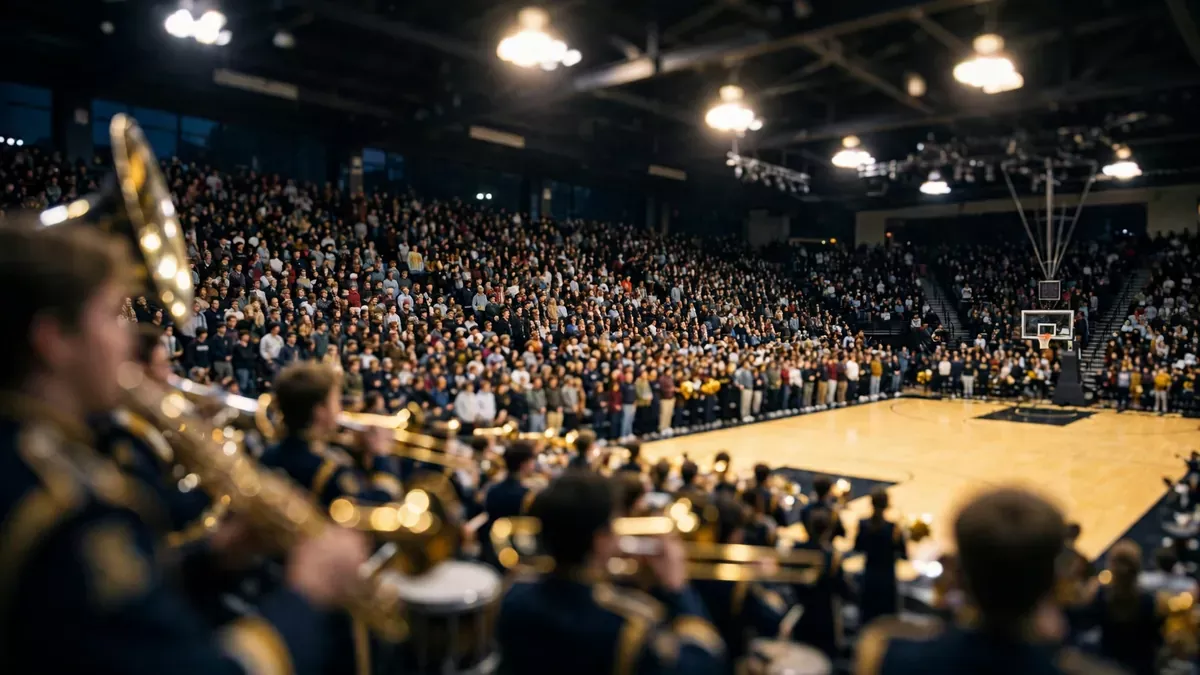
College basketball’s roughly 31 Division I conferences are the sport’s organizing layer: each runs a regular season, stages a conference tournament in March, and sends its tournament champion to the NCAA Tournament automatically. Beyond that one guaranteed bid, conferences diverge wildly — the strongest leagues (the ACC, Big Ten, Big 12, SEC and the basketball-driven Big East) routinely place six to ten more teams as at-large selections, while most smaller leagues are “one-bid leagues” whose only path is winning their conference tournament, no matter how strong their champion’s season was. The gap is not favoritism: it is math. At-large bids follow the NET and quadrant records explained in our metrics guide, and power-conference teams accumulate quality wins (and survivable losses) simply by playing each other, while mid-major contenders get few such chances and no margin for error. Add NCAA Tournament “units” — the per-game payments that make bids worth real money to leagues — and you understand why conference strength is the sport’s most argued-over asset. This guide explains the structure and the bid economy behind it.
Key Takeaways
- Every conference tournament champion gets an automatic bid — about 31 of the 68 NCAA spots are settled this way; the rest are at-large picks.
- Bid gaps are metric math: power leagues offer weekly Quad 1 games, so their members build tournament résumés even with mediocre league records.
- A one-bid league’s regular-season champion can miss the NCAA Tournament entirely if it loses its conference tournament — the sport’s cruelest week.
- Multi-bid mid-major leagues (the A-10, Mountain West, WCC and MVC in strong years) live in the narrow band between: they need November wins to make March arguments.
- NCAA “units” pay conferences for each tournament game played, spread over six years — a single bid is worth roughly seven figures to a small league.
- Realignment is football-driven, but basketball inherits the consequences: league depth, travel, and tournament formats all move with football money.
The structure: season, tournament, one golden ticket
A conference is a scheduling and governance alliance: members play a regular season of roughly 18–20 league games (full or partial round-robins, increasingly unbalanced as leagues grow), maintain standings, and crown the postseason at the conference tournament — single-elimination, usually at a neutral showcase site (the Big East at Madison Square Garden is the cathedral example) though some smaller leagues still start on campus floors. Formats vary deliberately: many leagues give their top seeds double byes or place early rounds on higher-seed courts, protecting the regular season’s best teams — and, not coincidentally, the league’s best at-large candidates — from bid-stealing chaos. The champion receives the automatic qualifier (AQ) bid; nothing else a conference controls is guaranteed. Regular-season titles carry banners and seeding, not bids — which is why “conference champion” in March almost always means the tournament winner, and why the regular-season crown is the sport’s most under-rewarded honor, especially now that the NIT no longer guarantees regular-season champions a place either (the subject of our next guide in this series).
Why power leagues stack bids
The selection math in our Quad 1 guide explains the stack. In a top league, a mid-pack team plays 12–18 Quad 1 or Quad 2 games inside its own conference schedule: it can finish 9-11 in the league, collect four or five Q1 wins along the way, post a gaudy strength of schedule, and arrive at Selection Sunday with a résumé no 26-win mid-major can match — because the mid-major’s entire season offered maybe four such chances, all on the road in November. League-wide NET management has become a discipline of its own: conferences urge members to schedule winnable-but-respectable nonconference games, because every member’s NET lifts every other member’s quadrant grid (your league mates are your most frequent opponents). When a league “has a year” — the SEC’s recent depth surges, the Big 12’s efficiency era — it is usually November’s nonconference results compounding through January and February. None of this requires a conspiracy in the committee room: the committee picks résumés, and conferences manufacture them at different rates.
The middle class and the one-bid world
Between the power structure and the one-bid leagues sits the multi-bid middle — leagues like the Atlantic 10, Mountain West, West Coast and Missouri Valley in their strong cycles — whose second through fourth teams live permanently on the bubble. Their recipe is narrow: win real games in November (Thanksgiving tournaments are their Q1 orchard), avoid conference bottom-feeders’ landmines in February, and hope the top of the league is strong enough to make league wins count. Below them, the one-bid world plays a different sport emotionally: a 30-win season means nothing if the wrong night arrives in the conference tournament, which is why the first week of March — dozens of small tournaments, every game an elimination — is the purest week in American sports. The cruelty is also the charm, and it funds the month: every league, however small, gets its champion on the bracket and its moment in the First Four or against a 1-seed, which is precisely the democracy the power leagues’ bid stacks are measured against.
Units: why bids are money
The NCAA distributes a large share of tournament revenue to conferences through units: each game a team plays in the tournament (excluding the championship final pairing logic — each appearance up to the final earns a unit) pays its conference a sum annually for six years — in recent cycles roughly $2 million per unit across the payout period. For a power league, units are a pleasant river; for a one-bid league, a single tournament win by its champion (earning an extra unit) can equal a meaningful slice of its annual budget, and a Cinderella run can transform a small athletic department’s finances for half a decade. Units explain otherwise odd behavior: leagues rooting publicly for their rivals in March, conferences designing tournament formats to protect their best teams, and expansion decisions that quietly weigh a candidate school’s basketball value. When fans ask why everyone in a league celebrates a rival’s Sweet 16, the answer is accounting, not brotherhood.
Realignment’s basketball footprint
As with football, basketball conferences are reshaped by football television money — but the basketball consequences are their own: leagues growing to 18 members adopt unbalanced schedules (you may visit a league rival once in four years), tournament brackets stretch to exclude bottom finishers in some leagues (not everyone qualifies for the ACC tournament in its 18-team format), and historic rivalries become biennial events. Basketball-first leagues like the Big East — no FBS football at all — exist as the counter-model: a conference built entirely around the sport, whose round-robin purity and Garden tournament make it the traditionalists’ favorite. The map will keep moving; the bid math will keep rewarding depth wherever it pools.
College basketball conferences FAQ
How many Division I conferences are there?
About 31 in the current alignment, each with an automatic bid for its tournament champion. The number drifts as realignment creates, merges or dissolves leagues.
Why does one power league get nine bids and another conference only one?
One bid per league is guaranteed (the tournament champion). Everything above that is at-large, awarded on NET/quadrant résumés — and power-league schedules manufacture those résumés weekly, while most small leagues’ schedules cannot.
What is a one-bid league?
A conference whose teams realistically cannot earn at-large bids in a given cycle, so its sole NCAA entry is its tournament champion — often 20+ leagues in a typical year.
What is an NCAA tournament unit?
The NCAA’s revenue-sharing atom: each tournament game a team plays earns its conference a payment distributed annually over six years — roughly seven figures in total per unit in recent cycles.
Do all conference teams play in their conference tournament?
Usually, but not always: some oversized leagues now exclude their bottom finishers from the conference tournament field.
What makes a conference “strong” in the committee’s eyes?
Nonconference results in November and December. A league whose members win those games lifts every member’s NET and quadrant record for the rest of the season.
Related reading
The bids are awarded by the committee in our selection guide using the metrics in our Quad 1 explainer — standings and bubble races live on our College Basketball hub.
Corrections: if you spot an error in this guide, tell us through our Corrections Policy page and we will check it against official sources.